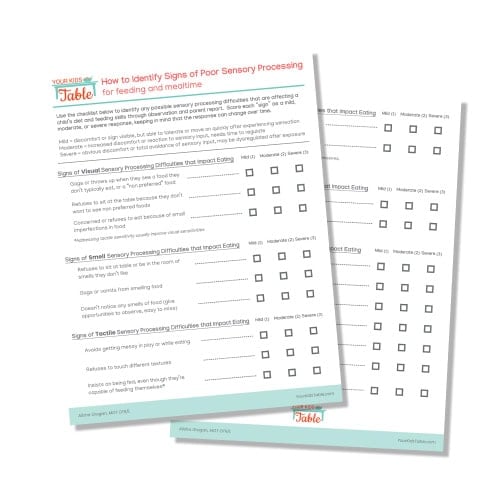
![]() |
| (And for any other kid's eating you want to improve.) |
My hope is that this page will provide you with the tools to start laying a good foundation in your kid's eating skills. I believe this list contains the most important steps to getting your kid/toddler/baby (picky eater or not) to eat well. These are the strategies I often give parents when I walk into their home for the first time and when families are able to make these changes I see the most improvement. As a mom, they have helped set the stage for both my sons feeding skills, and I notice very quickly that when I deviate from these rules their eating suffers. In those instances, I get back to these basics, and it works! If the following steps seem overwhelming, then think about implementing them in small manageable steps. I have many more tips and strategies in just about every post I write, even the recipes (check out a list at the end of this page).
1. Eat with your kids.
This may seem like an obvious tip, but in today's hectic pace of life it's so easy to multitask or take a break when our kids are eating. We are juggling so much and getting your kid into a chair with food in front of them can be a monumental feat in and of itself. I know it may be the only time you have to unload the dishwasher or check your email, but eating with your child is a valuable and a worthwhile learning opportunity. If your child's eating is poor, this is an opportunity you don't want to miss very often, not to say that it also isn't important for the kids that are eating well.
Meals are a social experience and we learn from what we see, you know, monkey see, monkey do. If you expect your kid to eat something new, how willing will they be if you aren't trying it too? Kids, especially babies and toddlers, may actually watch how you bite and chew a new food, using you as a model for how they should proceed. It also sets a standard of eating, meaning your kid will grow up knowing that vegetables (or whatever else you are eating) are healthful and part of a normal diet. I am not saying that all kids will see Mommy eating spinach and thus eat spinach, but it is the first step in setting a good foundation for a diet with more variety. Another advantage to eating with your child is that you can quickly give them encouragement to try the spinach before it ends up on the floor or they have filled up on milk and noodles (which might happen if you are distracted by unloading the dishwasher.)
If it seems overwhelming to carve out time to eat with your child, start small, aim for eating dinner together three times a week, or nightly, eventually making your way up to eating together for most meals. Of course, there are times when logistically it doesn't work out, don't beat yourself up about it if it doesn't happen occasionally.
2. Eat at a table.
Okay, be honest with yourself, how often does your child actually sit down at a table to eat their meals (no judgement here from me)? Our culture has become so hurried that it's very commonplace to set out a plate and let our kids eat while they play (aka grazing) or pass through a fast food window and eat in the car. However, in these types of scenarios kids are distracted and the message that's being sent is "eating isn't that important." There are situations where this is inevitable, such as traveling and parties, outside of that I would strongly discourage it, at least on a regular basis. If you need to start small (baby step) use a pop up card table or a coffee table at first (also see my post on "Turn off the TV"). A small kid's table is fine too, just make sure you are going to sit at it with them.
3. Space meals and snacks 2.5 -3 hours apart.
I can't stress how important this is, and it is probably the biggest mistake everyone makes! Don't worry, it's not your fault, nobody tells you that kids are suppose to eat every 3 hours with NOTHING in between but water. Kids like to graze and snack throughout the day, which on the surface seems fine because at least they are eating. In reality, they are eating just enough to suppress their appetite and then don't get hungry enough to eat a meal. Juice, milk, or cheerios are enough to fill their little bellies up, so save the other drinks to have with their meals. I have seen the greatest improvements in kids eating when families strictly adhere to this. The 2.5-3 hour mark is the ideal window of time for their metabolism and hunger cycle. I know that for some families this can be a big change, but I think it is well worth it. Besides, this is the best cycle for adults to be on too, it increases our metabolism, helping us to maintain a healthy weight. If you don't believe me, try an experiment, follow this for a couple days and see if you notice a difference. In most cases, they will be hungrier when they get to the table. Here is an example of Sam's routine:
Breakfast- 8:30 AM
Lunch- 11:30 AM
Nap- 12:30 PM
Snack- 4:00 PM
Dinner- 6:30 PM
Bedtime- 7:30 PM
You don't have to follow this exactly, base it around when your child sleeps. Generally, have them eat about 1/2 hour after waking up. Sam takes a three hour nap most of the time so that afternoon snack may be a little longer of a stretch. If your child sleeps later in the day, it may make sense to have a morning snack. Maybe they take a short nap or don't take one at all, then a morning and afternoon snack might make more sense. Of course, a bedtime snack could work as well.
4. Don't force feed.
I am going to keep this short. Please don't hold your child's mouth open and shove a fork into it. I know you just want them to try it because if they do they will love it, but it creates so much negativity around meals that your child will start to avoid them altogether. Forcing them to eat also makes them distrustful at meals. They feel like they have to be on guard and are thus defensive, which means they will eat less. Most simply though, it isn't very nice. How would you feel if someone was doing that to you? If you have already done this, it's okay, just don't do it again, and let your kid know you won't do it again. Stand behind your word and you will start to build some trust and make some progress.
5. Set an example.
Children take in so many of our nuances and behaviors, the good and the bad. They see your reaction when you have a bite of broccoli, or if you even put the broccoli on your own plate. If you don't like to eat certain textures or have a limited diet, your child will pick up on it. They notice and will repeat the disgusted face you made when you tried a bite of the broccoli or if you didn't take any of the broccoli. This sends a very strong message to them: you can pick and choose what you want to eat and some foods taste gross. Try to put aside any food issues you may have and at least stay neutral about the food if you can't be excited about eating it. Also, consider if you are limiting the foods you expose your child to because you don't like them. Just because you don't like mushrooms, doesn't mean your child won't like them. In fact, you are doing them a disservice by assuming they won't like it... I know the thought process doesn't even get that far usually. You may not even think to buy the mushrooms because you don't eat them. Think outside of the box a little when planning your meals, is there something else you can all try together? Just remember to be conscience of your attitude and personal response to the food.
6. Don't be a short order cook.
I know it sucks when your kid doesn't eat what you put down in front of them, especially if you had them in mind when you were making it. I really struggle with this myself as a mom, even though I know better as a therapist. It is beyond frustrating when they push the plate away, start to play with the food, or try to get out of their chair. As a parent you start to add up what they have already eaten that day and maybe it was't so great. Maybe they are tantruming, cranky, and you know that if they don't eat something it is going to be a long night. In some cases, parents are worried about weight gain and if the kid doesn't eat, they aren't going to put on weight. I know it is so tempting to open the fridge and say "What do you want?" or to reach in the cupboard for the easy mac you know they will eat, but I would encourage you to take a deep breath and collect your thoughts. How do you really want to proceed? If you give in and get them a preferred food or something they requested, you are reinforcing the idea that they don't have to eat what you are serving. I can almost guarantee you that the next meal you put something in front of them, they will do the same thing to get what they would rather eat. Think about it, as adults we know it's not healthy to eat easy mac every night, or at least we should, but children don't have self control. It is our job to teach that to them... I know it is a really hard job! Ultimately, I think it is more frustrating to start cooking multiple meals when you have already put the effort into the one that is front of them, and now your cooking again instead of eating together as a family. Your kitchen is not a restaurant, don't let you kids think it is one.
7. Have a preferred food at each meal.
A preferred food is something your kid likes and consistently eats well, this is the kind of food you can count on. For instance with my son, Sam, bread is one food he loves and he would eat tons of it at a meal before touching anything else, if I let him. Some kids only have a few foods they consistently like. If that is the case, then you may want to broaden what you consider preferred to also include foods they eat at least some of the time. When you give your child a meal, try to have at least one food on the plate you know they like. This frees you up to give some other foods that may be non-preferred or new because you know that at a minimum there is something they will actually ingest. This principal goes hand in hand with principal 6, and should make you feel more comfortable about not resorting to short order cooking.
Okay, let me give you a more concrete example:
- Corn, green beans, noodles, ham, cheese, and shrimp are some of Sam's preferred foods. Cauliflower, chicken salad, lettuce, hamburger, and navy beans are some of his non-preferred foods. I know I am going to make hamburgers for dinner, which may be a struggle for him to eat, if he eats any of it at all. To offset that I would make green beans (not cauliflower), put cheese on his burger, and of course he would have his bun, which will help him feel more comfortable and thus more likely to try some of the burger. Of course, I am going to spend a little time working with him to eat his non-preferred food as well. In this example, I gave him more than one preferred food, but you don't necessarily need to, one preferred food at a minimum.
Well, that is it, my list of feeding tip essentials. Depending on the kid, give these steps some time, for a child (and you) to adapt to a new routine before you expect to see major changes in their eating. But, if you pay attention, I bet you will notice some small positive changes. Give yourself a pat on the back for the baby steps, they are important and they add up. Don't forget to praise your kiddo on the small changes you see too (be specific: I really like how you tasted a green bean tonight)!
Some Encouraging Words
I wish I had some quick trick that would solve all of your kid's "picky" eating tendencies. Feeding your kid can be the most stressful time of day if you feel your child isn't eating well. Although you can pick up some quick suggestions here, at Your Kid's Table, that will help, most of the strategies I am recommending require some real change, which is really hard for anyone. In most cases, the more selective your kid is about eating means the more changes you will need to make. Start making small changes each day, each week, and it won't be as overwhelming. Don't expect miracles to happen overnight. Look for the small accomplishments and pat yourself (and your kid) on the back. My best advice is to stay consistent and to keep trying!!! I will help get you there!
Links to posts with more tips and strategies:
Cooking with Your Kid: Paella with Roasted Red Pepper


thanks for your post, I will try to do this with my son!
ReplyDeleteFeeding SKILLS?! If there is one "skill" every child is born with, it is EATING. If a child is a "picky eater" they have been trained that way by the parent. The good news is that is is very simple to undo. When you've put good food in front of them and they don't eat it.You take it away until the next mealtime. Period. Nothing needs to be said. Nothing SHOULD be said, as eating what is served is not up for discussion.
ReplyDeleteGive me one example of a child who has starved to death because they "refused" to eat.
Super Genius. Picky eaters are not always trained to be that way. I have 8 month old twins. They have been offered the same things since birth, starting with breast milk, then formula, then solids. My daughter drinks and eats like a champ, growing as she should be. My son struggles to gain weight and was diagnosed failure to thrive at 3 months old. He has never been on the growth charts. He has no known health issues. He has sensory issues. There was a time that he refused bottles and he did dehydrate and land in the hospital. It took months to get him to take anything off of a spoon, including plain formula. He clamps his mouth shut at anything that isn't bland or that is a funny texture. We offer him the same foods as his sister but with his slow weight gain, if he clamps his mouth shut and cries over a new texture or food, we wait a few minutes, then try it again mixed with a food we know he likes. If he doesn't start to show an upward trend on weight gain, he will need a feeding tube. So to give you an example, my failure to thrive son very well could starve to death if he continued to refuse to eat.
DeleteThanks for sharing. You are completely right! I hope the blog gives you some help for your son!
DeleteSuper genius, what an ignorant comment. obviously you have never had to deal with a child who has issues with textures of different foods.
DeleteAlisha, thank you so much for this post. My son is a 23 weeker who had a number of texture issuse when he was switching to table foods, not to mention an enamel disoredr on his teeth, which lead to them being really sensitive to eating tougher foods (like meats). He is 6 now, and still has a really hard time with certain foods, and mostly won't eat meat still to this day. This did have some very useful information to try (I like the idea of #7 what a great idea, I don't know why that never occured to me!) Thanks for you blog, I came across this one from your blog on How to Parent your Picky Eater with Patience and Love.
Super genius, you have not had the experience of having a child with sensory issues. My son has been gagging/vomiting at new textures since he was about 5 months old. He is 3 years old now. I tried the "tough love momma" approach when my friends thought I was being too easy on him with his "picky eating". It ended up having him not want to come to the table with his normal foods and not want to pick up a spoon for at least 3 months!
DeleteAlisha, thank you for writing this post. I found you through Pinterest and I appreciate the reminders of the Basic Strategies.
Thanks for sharing your story, I think it is helpful for others to read. Glad you found your way here:)
DeleteIt is true that most kids will eventually eat, about 90% of them. There are about 10-11% of kids that won't eat even once they get hungry, for a multitude of reasons. Although, I agree that kids learn many of their eating habits from their parents (and that's what I am addressing on this blog). Some kids have sensory, motor-control and dexterity problems, and/or medical issues such as reflux that will prevent them from eating even if they are hungry. Some kids don't even perceive hunger and thus aren't motivated to eat.
ReplyDeleteSadly, I have treated a few kids that have needed feeding tubes put in because they refused to eat and were becoming malnourished. I have worked with many more that require their calories and nutrition to be managed because of lack of variety and volume. It is a myth that feeding is instinctual, it is a learned skill and just like any other skill, some kids need help with it.
I would like "Super Genius" to feed my child for one month and see how it feels to have an extremely picky eater, whose parents eat a wide variety of protein sources, vegetables (either salad, cooked vegetable or raw vegetable) and fruit (either fruit salad, slice of fruit) at every meal. When your child goes for weeks without eating, you get understandably worried and do tend to give in when they request something.
ReplyDeleteBut, I'm not writing to talk to "Super Genius" or have any conversation what-so-ever with anyone else who will give me such "advice". I'm writing to get some feedback from you, Alisha. I have a 3 year old son who started his pickiness around 18 months. He, at one time, at a pretty good variety of food, based on what he was able to eat at that age. He devoured cooked mixed vegetables with joy, plenty of fruit, pancakes, waffles, eggs, peanut butter, muffins, meatloaf, sweet potatoes, and was fairly open to new options.
Gradually, as he got older, more and more foods slipped from his preferred food list. He get into a rut, and I'd let him eat his preferred choices for at least one meal, so I knew he was getting something.
Somewhere along the line we settled ourselves into a routine of him eating a decent breakfast (fruit, cereal, milk), and refusing the rest of the meal choices offered. And, in the last year, he has even started refusing breakfast cereals, and he has completely dropped almost all protein sources (minus peanuts - which are hit or miss). His diet consists of fruit (wide variety), crackers, homemade muffins (with as many vegetable purees and pureed protein sources I can muster), milk (with carnation breakfast essentials), water, multi vitamin (with iron), and random occasions of a whole wheat tortilla, whole wheat pizza crust. He will not eat any combined foods (like a PB&J sandwich, tortilla with cheese inside, fruit on top of a rice cake, etc). It has become almost impossible to find foods for him. I continue to give him what we have for dinner, and will do half and half for lunch (ie. half of his list of preferred foods and half what I eat), but no go.
We've had a consultation with a feeding team and they recommended to keep giving him the carnation breakfast essentials and then (surprisingly to me) told me to just give him what he wants including pudding, ice cream, cookies, etc. Note: my husband and I NEVER eat dessert. Only maybe 1x a month. And, it's usually pudding or fig newtons. I cannot under any circumstance provide him sweets if he hasn't tried healthier options first.
My son is of normal weight, height, etc. There have been no blood tests performed to see if he's lacking nutrients, etc. He is a very intelligent little boy. He started reading books at age 2.5. So, there is not any type of learning disability or failure to thrive.
I'm at my wits end. Advice?
Oh Kim, I really feel for you. It is incredibly stressful when your child doesn't eat! It sounds like you have a meal time routine already in place, if you don't start to work on that. Also, as I talked about above, don't allow any snacking between meals and make sure at least one preferred food is available at each meal. If you are all eating together, try to serve food family style and let him serve himself (this gives him an opportunity to interact with it). You guys should also take some of his preferred food, even if it doesn't go with the meal, because you want to send the message that it is part of the meal, not something that is special for him because he isn't going to eat anything else.
ReplyDeleteMore specifically, make a list of all of the foods he eats consistently and eats sometimes. Do they have something in common, color or texture? What can you expand on? Could you try cashews, since he eats peanuts? The idea is to take what he is already eating and make small changes. This may take time, with multiple trials. Check out my post on Try and Try 12 times, he may need 20 trials.
Are meal times stressful? You want to create a positive environment, this is really important, too. For help with this check out my series on Making Meals Positive.
If you haven't tried getting him involved in cooking, do so, that is a powerful tool. I have a couple posts on Cooking with Your Kids, don't pay attention too much to recipes, but the strategies I used with my son.
Lastly, try to get your son to interact with the food on some level even if he doesn't eat it. Maybe he can scrape it into the garbage? Or play a game to shoot the pieces of meatloaf he didn't eat into the sink (once the meal is over) so that he is touching it. Just encourage though, don't force. Ideally you want him to slowly get the foods closer to his mouth. So if he is touching it then try to get him to touch it to his nose (in a game) or smell it or kiss it or lick it or stick it in his mouth and spit it out (this is the general progression). You want him to feel the pressure is off so try to relax and acknowledge whatever baby steps he is taking.
Stay tuned for more posts, I will continue to address many of these topics in more depth! I hope this helps get you started. I am glad he is doing so well in all other areas, that is really good! It sounds like you are doing a great job with him. Just keep trying, you will get there, and of course keep the pediatrician in the loop.
One more thought: Have you tried milkshakes/smoothies? You can add a ton of stuff in there and really pack in nutrients and calories.
I do have a few questions: Does he seem bothered by textures on his hands or face? Does he have difficulty chewing food? Does he frequently gag or choke on food?
Good Luck, let me know how it is going!
Super Genius is being super ignorant. My son is tube fed at 4yo due to many medical issues he had as an infant/toddler (dysphasia/micrognathia/silent aspiration and severe reflux.)Although those issues have been resolved, with the exception of reflux) he still has no hunger cues and refuses all food except for Ritz crackers and occasionally Rice Crispies (dry). He would absolutely STARVE if he did not have a calorie boosting formula several times a day. Thanks Alisha for addressing this issue.
ReplyDeleteThis comment has been removed by the author.
DeleteJanis, I am so glad you found the site! I understand where you are! I admire your resolve to improve his eating. Keep working on these steps! I hope you can find some strategies that work. Give yourself credit for all the small steps your son takes. Let me know how it is going!
DeleteHi Alisha,
ReplyDeleteGaaa!!!! I LOVE your blog. Again, this is just the second bit I've read, but it's awesome. I'm pretty good about already doing your tips from the article. My question is in your response to one of the comments.
My son is not a great eater. He also HATES for his hands to be dirty. He freaks if he gets sand or dirt on his hands (or feet for that matter). The other day we were at his mommy-and-me preschool group and the kids had to put their hand in ink and make handprints on paper. He freaked out - screaming, running away, crying, the whole thing. I put my hand in to show him, but no luck. Could this be connected to his issues with food?!? This could be a HUGE revelation!!!
Yes! It absolutely could be linked. Sensitivity to tactile textures can relate to feeding and a limited diet. I hope to write a post on this very topic soon. Check out the Sensory Basics page, just to give you an overview. Start to slowly get your son to play in textures, try dry first like bins of dried beans (I will have a post on this next week)or rice. Let him look for objects in it, scoop, and dump with cups and shovels.
DeleteThank you so much for your kind words. Can't tell you how much I appreciate them!
Keep me posted!
You are a genius! A genius, I tell you!!! My son ate a cherry tomato for the first time ever - a cherry tomato!! We've been doing the whole "pick it up, touch it to your nose..." game for the past week and yesterday, he actually put it in his mouth (and spit it out, as per my directions). Then I told him to pop it in and take a bite. To my surprise he did it. OMG!!!
DeleteHe made a face like it was sour, so I told him he could spit it out if he wanted to, but he shook his head and kept eating it. He gagged a few times, but ate it. You have no idea how stoked I was.
Unfortunately it was the last one, so I couldn't give him another. I was totally not expecting him to eat it. I guess I learned my lesson - only try this with food we have multiples of. I cannot wait to keep trying with other foods!!
Thank you, thank you, thank you a million times over!!
Thanks for the wonderful comment! I think it is so helpful for others to hear what is working for others! You will continue to make progress, stay consistent!
DeleteSo fantastic, thank you for sharing!
Make sure you check out the post on sensory bins, if you think your kiddo doesn't like textures this will be great play for him (introduce slowly).
I've been meaning to respond to you for ages! We did the rice bin a few weeks ago and my son loved it - until he got sweaty and rice started sticking to him. He had a small freak out, but I showed him how to brush off his hands and just keep going.
DeleteAfter that, I thought pasta might be a good thing to do this with. He loves it! We switch back and forth and have also added water to the mix which is his absolute fav.
Great news on the eating front, as well!! He has started regularly eating vegetables. Holy Moses!! You have no idea how your blog has changed my life. That may sound silly, but I assure you, it's true! He now eats a vegetable at both lunch and dinner. We are up to raw carrots and cucumbers, steamed broccoli and green beans, and boiled corn. I know we aren't meant to be short-order cooks, and I wholeheartedly agree with this, but he REFUSES to touch anything with a sauce of any sorts on it (this includes butter). I figure let him have his veggies, as I know he will eat them and then give him a bit of my veg and let him scrape it off of his plate, onto mine, using a spoon. Sometimes even touching things with a spoon is impossible for him. It's all good though, I no longer get upset; hey, the kid is eating vegetables!! That's way more than I can say a month ago.
(Unfortunately, the tomatoes were a one off. Maybe one day soon, he'll bite into another?)
Dear Sugar Fairy --- You just made my day! Thank you so much for all of your kind words, it is so generous of you to share them with me. You are the very reason I started this blog. I really want to give people the tools to improve their kid's eating. Keep up all the good work you are doing, especially the stress free part, sometimes that can make the biggest difference! Also, keep trying the tomatoes when you have them around, he may surprise you again. Please don't feel like you need to follow all these strategies to a T, each child is different and if you need to keep sauces separate for a while than that is ok. You guys have made such wonderful progress, I am so happy (and proud) of you!
DeleteBy the way, it doesn't sound silly that this blog has helped changed your life! It is an amazing gift for me, to hear that! When a child doesn't eat well, it can be an enormous stressor as a parent (believe me I know). Then, they start eating and you see real change... a huge weight is lifted!
Super Genius shouldn't judge what he/she doesn't know about. My son would starve to death if left to his own devices. My son was born at 24 weeks and is now 14 months old. He was intubated 4 times during a 7 month NICU stay, had feeding tubes placed repeatedly, was suctioned repeatedly and also had severe enough reflux he would stop breathing and then his heart rate would drop to a dangerously low level. He also is currently force fed a large amount of fluids at each feeding because he has a kidney problem where he doesn't concentrate urine, so it is imperative he gets the exact same amount of fluids everyday. If he doesn't take the fluid by mouth, we have to give the rest via g tube even if he signals he is full. He has an oral aversion and is extremely distrustful of anyone approaching his mouth with say a spoonful of baby food. Luckily I'm a nurse and not easily scared of the gagging/choking sounds he makes if you just touch the spoon to his lip. He also has minimal hunger cues because we have to give him the same amount of fluid whether he wants it or not. Getting him to eat solids has been more frustrating than I could ever have imagined. I haven't read a lot of your blog yet but intend to do so. Thanks for posting such great tips.
ReplyDeleteShannon, I can't even imagine how difficult it has been! I have worked with kiddos in the same shoes as your son, it is a challenging road. He is still so little, take heart and stay consistent, he will get there! Are you able to feed him at the same time he gets his g-tube feeding? This way he will start to associate that his stomach is getting full when he is actually eating. I'm assuming you have an OT or Speech therapist addressing feeding so obviously defer to them first. Hope you find some helpful information!
Deleteoh, I had another question. When my son takes a bite of something that is not one of his preferred foods, he usually gag's pretty bad (but has only thrown up from it once or twice, that I can recall, in the last 6 yrs). Is there a way to get himm to try new foods where he won't gag like that? I usually tell him that he needs to have at least a few bites of something I know he does not like.
ReplyDeleteHi Christina, thanks for coming on over! First, I would give him lots of opportunities for tactile play outside of meals. Check out my Ultimate Sensory Bin list for inspiration. If he tolerates this try finger painting with foods, encouraging him to get messy. This will help get him comfortable with more foods.
DeleteAlso, try a vibrating toothbrush and encourage him to brush farther back on his tongue. This will help break down some of the sensitivity in his mouth. Gagging can also be a learned response. Try not to pay too much attention to it, I know that's hard. Let me know if any of that helps!
Great advice for gagging. We are dealing with this too.
DeleteSo happy to be reading your site. I am going to be using a lot of this information in the coming weeks/months with our new kiddos.
ReplyDeleteI always include a preferred food at each meal too. What do you do when the child wants a second helping of the preferred food and doesn't eat any of the other foods offered? I usually do offer a second helping but then won't offer a third unless they eat another type of food on their plate. But I wonder if that is the right thing to do.
And I hadn't realized, that there needed to be 3 hours between food. I had been doing about 2 hours between food.
Hi Rebekah, sorry I didn't get back to you sooner, I must have missed the notification that you posted a comment!
DeleteGive a normal helping of each food. Generally when they ask for more of the preferred food, I say: "you have to eat some of the other foods first, we eat some of everything not just our favorite thing." I try to talk to them about vitamins/nutrients and how different foods have different ones in them. I keep that part simple and brief. I'm not trying to lecture at dinner. Also, I am very careful not to use the preferred food as a reward, it is all in how you say it.
2and 1/2 hours is fine, but at 2 hours they may not be hungry enough to eat again.
I'm so glad I found your site from Pinterest! My daughter, like Kim's son, used to be a 5-star eater when she was first learning foods. When she started getting pickier, I realized that she had less of an issue with the food if it was hot or warmed than when it was cold. Not she's slowly losing foods from her "preferred" list and about the only things I can count on are bread, cheese, noodles, chicken, and corn. She used to be a champion at eating casseroles, and now she's starting to have a problem with that. I have found that when it has a sauce on the food, I can usually get her to taste just the sauce on my finger. If she likes it enough, she sometimes decides to eat the food covered in the sauce.
ReplyDeleteWe keep the high chair pushed right up next to the table, and generally we all eat together. Given her notes from daycare, she's definitely a "monkey see, monkey do" kind of child. She will eat just about anything at daycare, because the other kids are eating it too. I'm really glad they send home a menu for the week so I know she's eating well for at least 2 meals. I just nead her to eat something besides starches! We will definitely be trying #7! Thanks for the tips!
I am glad you found Your Kid's Table, too! It is so hard when their feeding changes, but you can get it back. It will be hard work at first, but you will start to see small changes! It is wonderful that she eats well at daycare, a very good sign. Try to keep mealtimes structured at your home too, and think of having a play date with a kid that eats some of the foods your child doesn't. Good Luck!
DeleteSo glad I found you VIA Pinterest. Our 21 month old has some definite "sensory " issues. He was a great eater unti about 18 months. then gradually started refusing most of what he had eaten before. He now only eats Hashbrowns, French Fries, Crackers, Pudding ,Yogurt,sometimes Bananas and yesterday ate CLAMS!! He eats "baby cereal" with applesauce morning and before bed. He hates to have things on his hands, will not wear shirts unless the tags are cut out, refuses to touch the grass with his feet and seperates his food into piles.
ReplyDeleteClams, wow, that's great! Check out my sensory bin list and try to have him play in those as he tolerates, that will help break down some of his defensiveness. Have you thought about having him evaluated by an OT, he might really benefit from sensory therapy? Your state should have a free early intervention program. Let me know how it is going!
DeleteLet me start by saying this is a great resource for moms, congratulations!
ReplyDeleteI am starting to have a problem with my 9 month-old son and I really hope you can help me. When he was 5 months old, I started introducing solids and I was surprised to see that he would eat ANYTHING I would give him, all kinds of fruits and vegetables. He even ate very fast and got anxious if it took me too long to give him the next spoon. Now, he is becoming a picky eater, but I think it doesn't depend that much on what I am actually giving him, rather than on what his mood is at that specific time, because he would refuse to open his mouth independently from what I am offering him. I don't really understand where the problem comes from, so I don't know how to correct it. From what I've read so far here, I might be making 2 mistakes: when he doesn't want his solids, I give him a bottle (even though lately he doesn't accept that one either) and he has always been eating at different times than us, therefore he doesn't really see us eating. Do you think that can be the problem? Is it normal that an amazing eater suddenly becomes a picky one?
Unknown- I am so sorry for the late response. I thought I had replied, but it mus not have gone through. Thank you so much for your comment.
DeleteAre you still having difficulty?
I just stumbled across your blog from a friend - I have a former 24 weeker, now 28 months old. Brief history: NICU for 123 days, 3 subsequent re-hospitalizations; vented a total of 40 days; pre-NEC twice; bruised intestines when they 'popped' through his bi-lateral inguinal hernia into his groin; due to the intestinal issues, didn't start ANY solid foods (baby cereal or anything) until he was nearly 11 months old (7 adjusted); he ate high calorie specialty formula due to reflux which he was medicated for a little less than a year for; and he has NEVER been a good eater (unlike some of the other commentors who had good eaters that turned into poor eaters).
ReplyDeleteHe only ate pureed baby foods until he was nearly 16/12adj months old, and never very much (like a couple spoonfuls a 'meal'). He has been officially diagnosed as failure to thrive since this past June (22/18 adj).
Sometimes, he will go through periods where he will eat a food (and only that food) for a few days, and he will never touch it again. Other times, he will put food in his mouth, chew it, and spit it out (but then will take another bite, so I don't think it is because he doesn't like it, per se?). One other thing, he chews fine, but he will NOT bite food - all foods have to be broken into bite-sized pieces. There seems to be no issues with his teeth.
Besides normal eating attempts (mealtimes and snacks), I have tried several of the 'techniques' given to me by the dietitian we are seeing through the hospital (we are not in the US, so medical care is, erm, different - I am American and struggle with the system here) - leaving bowls of food around for him to have on-hand at anytime he wants to eat (he pretty much never takes any), or to not offer him anything until he acts as if he wants to eat (he is non-verbal at 28 months and in speech therapy) - he went the entire day with out eating any solids (I kept his bottle at naptime and bedtime as normal). When he gets sick, even before he shows signs of illness, i know something is coming because he just stops eating completely (besides liquids), and he always loses 1-2 pounds for even a simple cold. He has never been 'on the charts' for his weight, but his height is between 50-60% and so he literally looks skeletal.
Another thing is, he doesn't vomit often, but when he does, it is always waaaaaay after he eats, and the food is never digested (sorry if this is gross, but he ate salmon and rice one day - I posted on facebook I was so happy he ate - at 7pm...the next day, after speech therapy, he vomited it all back up, and it looked exactly the same as when it went down - 15.5 hours later. And then, of course, he didn't eat any solids for 3 days....
The upside is that the dietitian has him on a calorie enhancer for his bottle (yes, still bottle, but only for milk - he will drink water and juice - when he will drink juice - from a cup), and that he drinks about 16-20 ounces of the milk a day, with the caveat that it is always at nap, bedtime, or in the middle of the night - almost like his stomach works better when he is lying down and all relaxed.
We are working to get in to see a GI dr to see if there is any physical problem as to his eating...but it is a long complicated process here to see a specialist. He went to an OT for an evaluation, but after she ended up making him scream for 15 minutes straight and left bruises on his wrists, I won't take him back there, and there is no other option here for OT.
I guess I don;t know what exactly I am asking (maybe just a frustrated mom venting), but help? Even when he eats it takes forever, so do I time meals 3 hours from when he starts or when he finishes? The other day, it took him a little over an hour to eat 1 piece of dry toast.
Help?
Oh my Lana, you really have your hands full! This is a very complex situation and when kids are underweight my suggestions can very because the most important goal is that they eat- anything! Have you heard of a stomach emptying test? When you see the GI ask about this, I would strongly encourage it. By the way- almost impossible to gross me out with 2 small boys and my line of work!
DeleteAs for spacing the meals, aim for the start of one meal to the start of the next. If this is a challenge, slowly work your way towards that time.
You may have already, but if not, check out my consulting services. Look at for the tab at the top of the page. I think they would help greatly!
I hope this helps- a little!
I am so thankful I found this website. I haven't tried any of your strategies yet but I have been in a power struggle with my 2 year old since we started foods. I had run out of ideas of what to do to get my son to try different foods and so we have been just serving him what he will eat. I knew that was wrong but it was so much easier than fighting with him at every meal time. I wish I found this sooner because there are a few things on your "Do not do" list that I have tried. Hopefully I can regain his trust and make meal time more enjoyable for the whole family.
ReplyDeleteYou can regain his trust! Don't worry about mistakes, we do the best we can with the knowledge we have in the moment. One piece of advice- don't go full monty with all the changes at once! Make changes slowly, it will be challenging, but if you stay with it you will see changes! Keep me posted, I would love to hear how it is going!
DeleteYour site has been really helpful. My 2 1/2 year old son has multiple food sensitivities that we are still trying to fully understand. He tested negative for celiacs, and is on a gluten free diet which seems to do the best for him...he never transitioned to milk well and seems to be lactose intolerant as I am. (I have multiple food allergies as well.)
ReplyDeleteI am going to try your suggestions with the routine times for eating...we've tried multiplie times during the day, consistently, but struggle with night time. He barely eats dinner, and then from 7-almost 9 pm eats almost non-stop (oatmeal, yogurt, cheese sticks...that he can have). It affects his bedtime drastically, and then he doesn't do well with breakfast. If we don't feed him like this at night, he is likely to wake up hungry, crying for food, by 3am...and eats and eats. I don't feed gluten free diets are as filling, he doesn't have a large range of food as other kids his age. I know toddlers can have tricky times with foods, but the endless eating so late at night is hard.
Will attempt your suggestions for timing (would put our dinner later, maybe that's a good thing). Have you ever encountered this before? Welcome any feedback. My happy easy going smart little guy and I get frustrated with food.
To add on one piece...he is also borderline anemic...some meals he only takes a few bites and only more if we completely engross him in conversation. (Try not to forvce feed as you guest but c
ReplyDeleteHe can get shaky if he doesn't take in enough....from reading your blog seems other toddlers don't always eat their meals in full either.
It is extra challenging when you have food allergies/sensitivities. And, yes, you are right- toddlers are famous for being willy nilly at meal time. That is normal. They really only eat when they are hungry. That is why it SO important to space their meals and be firm about no snacks in between. I know it seems mean, but at 2.5 he can certainly understand that if he doesn't eat now he isn't going to eat until the next meal. Also, I would recommend not feeding him in the middle of the night. When he wakes up tell him he can have some water, but he will have to wait to morning for breakfast. You may have a couple of rough nights, but he will get it and the cycle should end.
DeleteThanks for responding! It was pretty hard to read that response, after being going through so much in regards to allergy testing and multiple process of elimination diet attempts. We're working on the spacing between meals, and he hasn't woken hungry in a few nights after focusing on this. The idea of no snacks is hard, as he can become shaky at times, however eating more at meals perhaps will help. I appreciate your thoughts and take care.
DeleteI am so sorry that was hard to hear. I can see how hard you are working and how stressful this. Take your time and make small goals, focus on it being a process. Also, if your son does actually get weak, then obviously you have to break the rules. My hope would be this is the exception, not the rule. I don't want to overwhelm you, at all! I have seen many times over in my own home and others the dramatic improvement that comes with spacing meals apart. Kids are actually able to get hungry! No pressure at all, but if you would like to talk more, I think it would be helpful. I have consulting services, see the header at the top of the page. Good luck and either way let me know how things are going!
DeleteMuch better, thank you. Meal spacing seems to work but he has to eat immediately upon waking, or he just can't wait much longer and won't eat, or gets shaky. I've spent a lot of time making homemade gluten free products such as cheese crackers that are healthier and much more filling then store bought, which has helped. Most of all, chosen to relax more about meal times. When he's hungry, and with more variety, he just does great. Thanks!!
DeleteI do all of these and she still will not eat and will not eat till the food is cold if it is something she likes.
ReplyDeletePamela- I hear you. These are just the "basics"- some kids need more intervention beyond this. It is great that you have a good foundation going. If you feel like you need more help consider my consulting services or a feeding evaluation at a local outpatient facility.
DeleteMy son (21 months) has not only become a picky eater, he also has many food allergies. He has limited his diet now to grapes, bananas, yogurt, cereal, cheese, and crackers. He was eating pastas really well and I'd puree all kind of veggies into the sauce, but recently has started to refuse to eat that. I feel horrible because I have tried force feeding him against my best instincts. I feel like he has a severe distrust for food due to his food allergies and that is why he beginning to refuse to eat food. I also realize that I have not helped this due to the force feeding episodes. We have also sent him to bed without having dinner two nights in a row now. I am heart broken over this. The other issue is that I sometimes have to serve him something different if we are eating something for dinner that he cannot have due to his allergies. I hate sending him to bed without dinner, and I hate seeing him limit himself. I'm afraid I have made meal times too negative. Is there hope to turn things around?
ReplyDeleteYes, yes, yes- there is still hope. Allergies are so difficult and yes it does create a level of distrust. I know this is so hard- I really do feel for you! Try to serve at least one thing at the meal that you can all eat together and make sure he has at least one preferred food- that last part is critical. That way, if he didn't eat you know he had something legitimate available. Following these steps is a good start, but it sounds like you need some more help. What state are you in? Do you know about free early intervention services for kids under 3- every state is required to provide them. You can also do a consult with me, if your interested. I have more info available in the top tab.
ReplyDeleteThanks for your response! I am definitely going to try to make sure there is one preferred item available at meal time. Dinner was more pleasant tonight. He actually ate the pasta we were all having. I'm sending him to school tomorrow with foods I know he has eaten in the past and one preferred food. Wish me luck. (I am actually in Canada.)
DeleteI have been following your blog for several months now, and I just wanted to take the opportunity to say thank-you. You're strategies have been so instrumental in helping me and my son get over some feeding hurdles over the past couple of months. I find myself re-reading many of your posts every couple months as new challenges present themselves and I always step away with relevant information and strategies that work. At 13 months I was struggling to get him to eat any solid foods that weren't crunchy (i.e. cheerios). Now at 17 months he's eating things like chicken, sunflower butter, raisins, kidney beans, pizza, etc.
ReplyDeleteThank you for validating that every child is different and that what works for one child doesn't work for them all and that creativity pays off. He does have some sensory challenges (does not like the tactile feel of fruits and veggies) but you're advice about having preferred foods available at each meal and presenting food for him to play with (texture bins) has really helped him come a long way. He put an apple (non-preferred) in his mouth this week and chewed it without spitting it out!
I'm sure that your posts help so many parents like myself who just want to see their children build a good and healthy relationship with eating but have some challenges to overcome. I know I wouldn't have gotten this far without the support of your blog.
On another note, to you or whoever does the design work on your site (from a fellow designer) this is fantastic.
Dear Anonymous,
DeleteThank you so much for your beautiful and heart felt comment! I think a lot about every post I write and the best way to have it make the most sense to parents that are looking for help. It makes me feel wonderful that all the hours I have put in here have helped you, I rarely know who I am helping!
Thank you also for the design comment- I am a total novice and did do the blog myself, pretty overwhelming stuff- hence its simplicity, ha ha ha!